Most people who add something to a cart do not buy it right away. Some get distracted, some want to compare prices, and some hit a surprise at checkout. Abandoned cart flows exist to follow up with those shoppers. Win-back flows do a similar job for customers who bought once and then went quiet.
Both are among the most practical automations an ecommerce store can run, because they reach people who already showed interest. This guide covers how to plan them for a Shopify store, what to put in each message, and how a CRM makes them more relevant than a generic reminder.
Abandoned cart flows: the basics
An abandoned cart flow is a short series of messages triggered when a shopper leaves without completing a purchase. Shopify includes basic abandoned checkout emails, and many stores extend them with an email or SMS marketing tool for more control over timing, content, and channels.
The goal is not to nag. It is to remove friction and remind people of something they wanted. A good flow feels like a helpful nudge, not a countdown.
A simple three-message structure
- A reminder soon after abandonment, showing the items they left and a direct link back to the cart.
- A follow-up the next day that answers common hesitations, such as shipping, returns, or sizing.
- A final message a few days later, which may add a reason to act, such as low stock or a small incentive if it fits your margins.
Test the timing for your own store. The right gaps depend on what you sell and how considered the purchase is. A low-cost impulse item and a large purchase do not follow the same rhythm.
What to include in each message
- The actual products, with images, so the message is instantly recognizable.
- One clear button that returns to their cart.
- Answers to likely objections: delivery time, return policy, and how to reach support.
- Plain language and a friendly tone, with no fake urgency you cannot back up.
Why discounts should be a last resort
It is tempting to offer a discount in every abandoned cart message. Over time, that trains customers to abandon carts on purpose. A better approach is to lead with helpful information and reserve incentives for a later message or for specific segments, such as first-time shoppers or high-value carts.
Win-back flows: bringing customers back
A win-back flow targets customers who have not ordered in a while. Instead of the cart being the trigger, the trigger is time since the last order. That period should reflect how often your customers normally buy. A store selling consumables will reach for a lapsed customer sooner than one selling furniture.
Work out what lapsed means for you
Look at how long your repeat customers usually wait between orders. A customer who has gone well beyond that gap is a good candidate for a win-back message. A CRM that tracks time between orders makes this easy, because it can set the trigger from your real data instead of a guess.
A simple win-back sequence
- A friendly check-in that reminds them what they bought and shows what is new.
- A message featuring products related to their past orders.
- A final message with a reason to return, and an easy way to unsubscribe or update preferences.
If a customer does not respond after the sequence, stop. Continuing to message people who are not engaging hurts deliverability and brand trust.
How a CRM improves both flows
Flows built only on cart events treat everyone the same. When they are connected to a customer record, they can adapt.
- Skip the reminder for customers who bought the item another way, or who already contacted support about it.
- Send a different message to a loyal repeat customer than to a first-time visitor.
- Suppress marketing to customers with an open support issue, and fix the problem first.
- Use past purchases to recommend related products in a win-back message.
- Stop the sequence as soon as an order arrives, so nobody gets a reminder after buying.
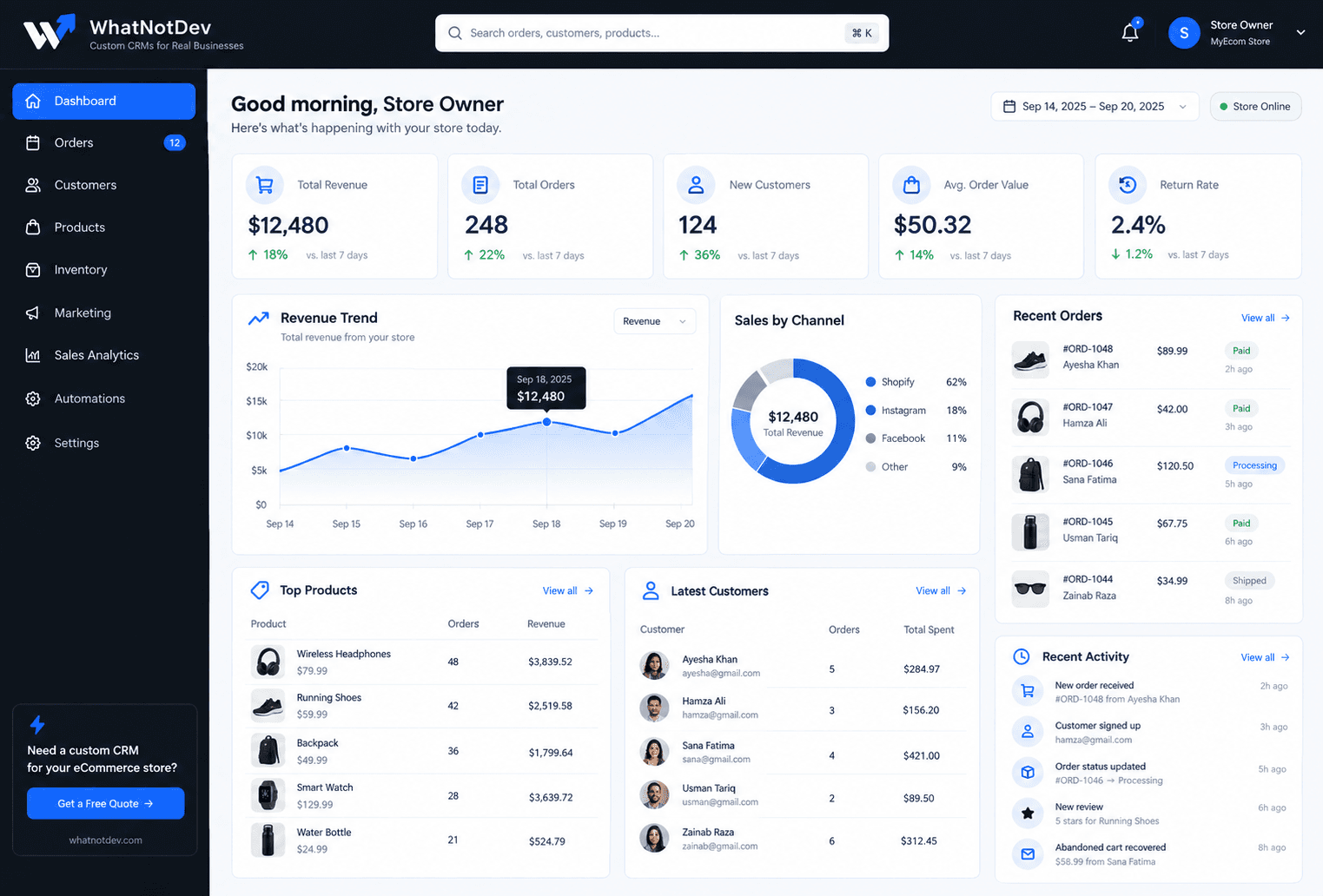
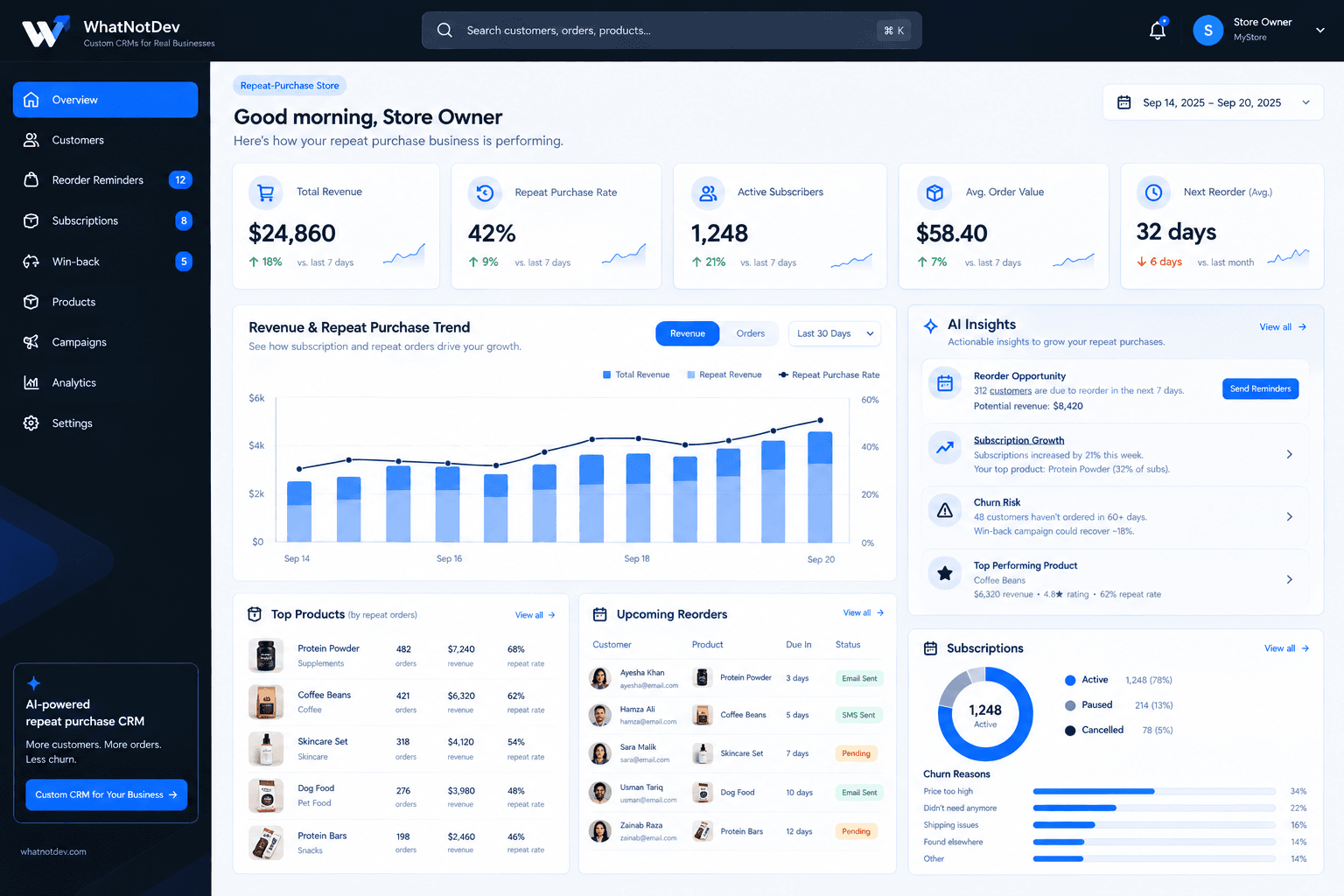
Our sample projects show how this looks in a dashboard. Urban Kit Co. includes abandoned cart and win-back flows with a unified activity feed, and Daily Provisions Co. adds win-back campaigns for lapsed customers. Both use illustrative data, not real client results.
Measuring what works
Track a few numbers for each flow so you know whether it is earning its place.
- Recovery rate: the share of triggered customers who complete an order.
- Revenue attributed to the flow, over a consistent window.
- Unsubscribes and complaints, which tell you if the messages are too frequent or off target.
- Which message in the sequence drives the most orders, so you can improve the weak ones.
Design the messages for a phone screen
Most shoppers read these messages on a phone, so design for a small screen first. Keep the subject line short, put the product image and the button near the top, and make the button large enough to tap without zooming.
Use plain, readable text and short paragraphs, and make sure the link takes people straight back to their cart with their items still in it. If the path from the message to checkout takes more than a tap or two, you lose the customers you were trying to win back.
Test one change at a time
Once a flow is running, resist the urge to rewrite everything at once. Change one thing, such as the subject line, the timing of the second message, or whether the first message includes product images, and give it enough time and enough sends to see a difference.
Small, steady tests teach you what your customers respond to, and they make it clear which edits actually helped. Keep a simple log of what you changed and when, so results are never a mystery a month later.
Consent, unsubscribes, and deliverability
Automated reminders are still marketing messages, so consent matters. Only message people who have agreed to hear from you, include a clear way to unsubscribe in every message, and honor those requests everywhere you send.
SMS has stricter rules than email in many places, so confirm what applies to you before you switch it on. Good list hygiene also protects delivery: messages sent to engaged customers are more likely to reach the inbox, which helps every flow you run.
Common mistakes
- Sending too many messages too quickly.
- Offering a discount immediately every time.
- Ignoring mobile, where most shoppers read these messages.
- Forgetting to exclude customers who already ordered.
- Never reviewing the flow after launch.
Where to go next
Once your abandoned cart and win-back flows are running, the next opportunity is customers who buy regularly. Our guide on repeat purchase and subscription tracking covers reminders and churn. If you would like these flows connected to your customer data, see our ecommerce CRM services or book a discovery call.